


Ages 30 to 39
While in his 30s, Demosthenes built his political reputation.
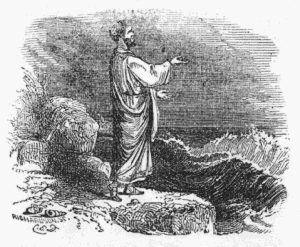
Gave first major speech
In 354 BC, when Demosthenes was 30, he made his first major political speech before the Athenian Assembly. His logical oration helped persuade the Athenians to build up their naval strength to show others they were willing to defend themselves. The speech was a great success.
From this point on, Demosthenes' career was concerned with Athenian foreign policy. It was not very long before his oratorical skill and fervor made him a political leader.
The Assembly environment
The Athenian Assembly was a loosely organized body of up to 6,000 male citizens. They would shout down a speaker they did not like and some would ridicule their rivals. Any citizen could speak, but only the best orators survived for long.
Had sharp wit
Among the speakers, Demosthenes stood out. One reason was because of his severe and perhaps forbidding personality. He also had a wit that was exceptionally caustic. He realized the advantage of making an audience lose respect for his opponent. Although he gained many supporters, he also made many enemies in the process.
Was a patriot
Demosthenes was a student of Greek history, and he used historical parallels in many of his public speeches. He would arouse emotions by asking the Athenians to recall their history, belief in democracy and hatred of tyrants. His love of democracy came forth in his speeches.
Was industrious speaker
Demosthenes was also very industrious. He would sit down at night and go over the conversations and speeches he had heard during the day, experimenting with various replies or speeches that could have been made. Although he excelled when he could prepare his speeches carefully in advance, his thorough preparation gave him the ability to respond to an opponent's remarks on the spur of the moment.
Against King Philip
When he was 33, Demosthenes delivered a speech against King Philip of
When Demosthenes was 38, in 346 BC, Philip and the Athenians agreed to peace treaty. Demosthenes went as one of the ambassadors to negotiate the treaty with Philip. During the negotiations, Philip recognized Demosthenes' eloquence as a threat to his plans, ignored him and addressed his fellow ambassador Aeschines instead. The two men returned from the embassy bitter foes.
Ages 40 to 49
When he was 41, Demosthenes gave a speech accusing Aeschines of political misdeeds and accepting bribes. The court, however, acquitted Aeschines.
Against Macedonians
For the next several years, Demosthenes continued his speeches against Philip and the Macedonians. The speeches--although moving--were ineffective in the fight. The Macedonian army was well organized under a single brilliant commander who used cavalry in coordination with highly disciplined infantry, while the Greek alliance depended upon what was essentially a group of citizens' militia.
When he was 46, in 338 BC, Demosthenes fought in a battle against the Macedonians but fled after dropping his arms. The Macedonians won the battle and defeated allies of
Alexander takes over
In 336 BC, Philip was assassinated and his son Alexander succeeded him. Alexander had been educated by a pro-Macedonian resident of
When the when the city of




No comments:
Post a Comment