


cover
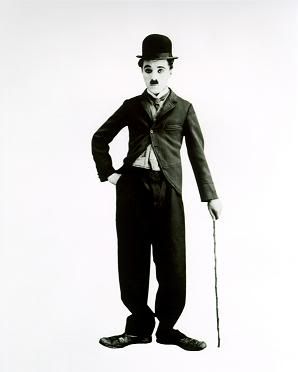
This may not be the right day for me to say about him i.e., neither birth nor his death anniversary was approaching in few days but dear readers, I think and in my view there is no need of particular occasion to memoir about him. Born 100 years earlier than me and being one of the earlier artists and studio owner in Hollywood who played many key roles as director, producer, writer, editor, scorer and last but not the least and even deserve to be in the first i.e., as an actor he was still considered as greatest actor ever in Hollywood.
He was who filled the world of early 20th Century with laughter with his short tramp character and he was who acted like a brave heart by coming with a movie The Great Dictator in which he criticized the rule of Nazis (it was released in 1940 during which the Nazis rule was at its culmination). He is one of the persons I like most. He is none other than Charles Spencer Chaplin who was better known as Charlie Chaplin. On this day of the weekend I would like to devote my posts of today to him. Hope you will enjoy these posts.
Eighty years later, Chaplin is still here. In a 1995 worldwide survey of film critics, Chaplin was voted the greatest actor in movie history. He was the first, and to date the last, person to control every aspect of the filmmaking process — founding his own studio, United Artists, with Douglas Fairbanks, Mary Pickford and D.W. Griffith, and producing, casting, directing, writing, scoring and editing the movies he starred in. In the first decades of the 20th century, when weekly movie going was a national habit, Chaplin more or less invented global recognizability and helped turn an industry into an art. In 1916, his third year in films, his salary of $10,000 a week made him the highest-paid actor — possibly the highest paid person — in the world. By 1920, "Chaplinitis," accompanied by a flood of Chaplin dances, songs, dolls, comic books and cocktails, was rampant. Filmmaker Mack Sennett thought him "just the greatest artist who ever lived." Other early admirers included George Bernard Shaw, Marcel Proust and Sigmund Freud. In 1923 Hart Crane, who wrote a poem about Chaplin, said his pantomime "represents the futile gesture of the poet today." Later, in the 1950s, Chaplin was one of the icons of the Beat Generation. Jack Kerouac went on the road because he too wanted to be a hobo. From 1981 to 1987, IBM used the Tramp as the logo to advertise its venture into personal computers.




No comments:
Post a Comment